Home› ENT & Audiology› Cochlear Implant

Cochlear
Implant Care

Expert evaluation, surgery and hearing rehabilitation for people with severe to profound hearing loss who get little benefit from hearing aids, helping you hear and connect with the world again.

Candidacy
Evaluation

Cochlear Implant
Surgery

Activation & Hearing
Rehabilitation

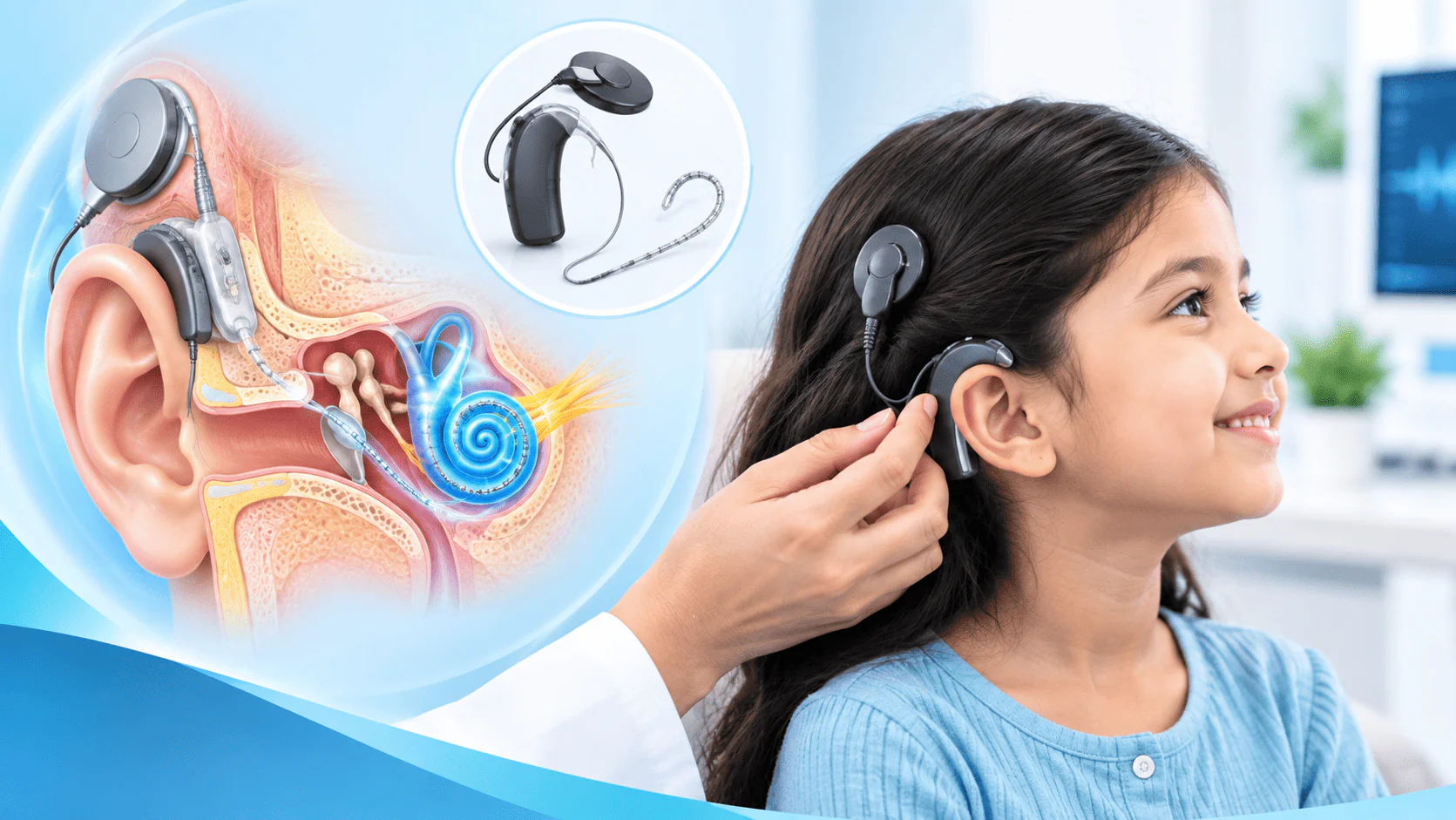
Illustration of a cochlear implant with the external sound processor and the electrode placed in the cochlea

About Cochlear Implants

A cochlear implant is a small electronic hearing device for people with severe to profound hearing loss who get little or no benefit from hearing aids. Unlike a hearing aid, which makes sound louder, a cochlear implant bypasses the damaged part of the inner ear and sends sound signals directly to the hearing nerve.

At Centosa, our ENT surgeons and audiologists guide you through every step: hearing and imaging evaluation to check candidacy, surgery, device activation and mapping, and long-term auditory and speech rehabilitation. We support both children and adults, with early implantation and regular follow-up helping to give the best results.

Hearing is the first step to connection. The right implant, at the right time, opens the door to sound.
Who Can Benefit From a Cochlear Implant

A cochlear implant can help children and adults with these types of hearing loss, including:

Severe to Profound Hearing Loss

(Little Benefit From Hearing Aids)

Deafness in Children

(Hearing Loss From Birth or Early Childhood)

Sudden Hearing Loss

(Loss of Hearing Within Hours or Days)

Progressive Hearing Loss in Adults

(Hard to Follow Speech Even With Hearing Aids)

Hearing Loss After Meningitis

(Infection-Related Inner Ear Damage)

Single-Sided Deafness

(Little or No Hearing in One Ear)

Age-Related Hearing Loss

(Hearing Decline in Older Adults)

Drug or Noise-Related Hearing Loss

(Damage From Ototoxic Medicines or Loud Noise)

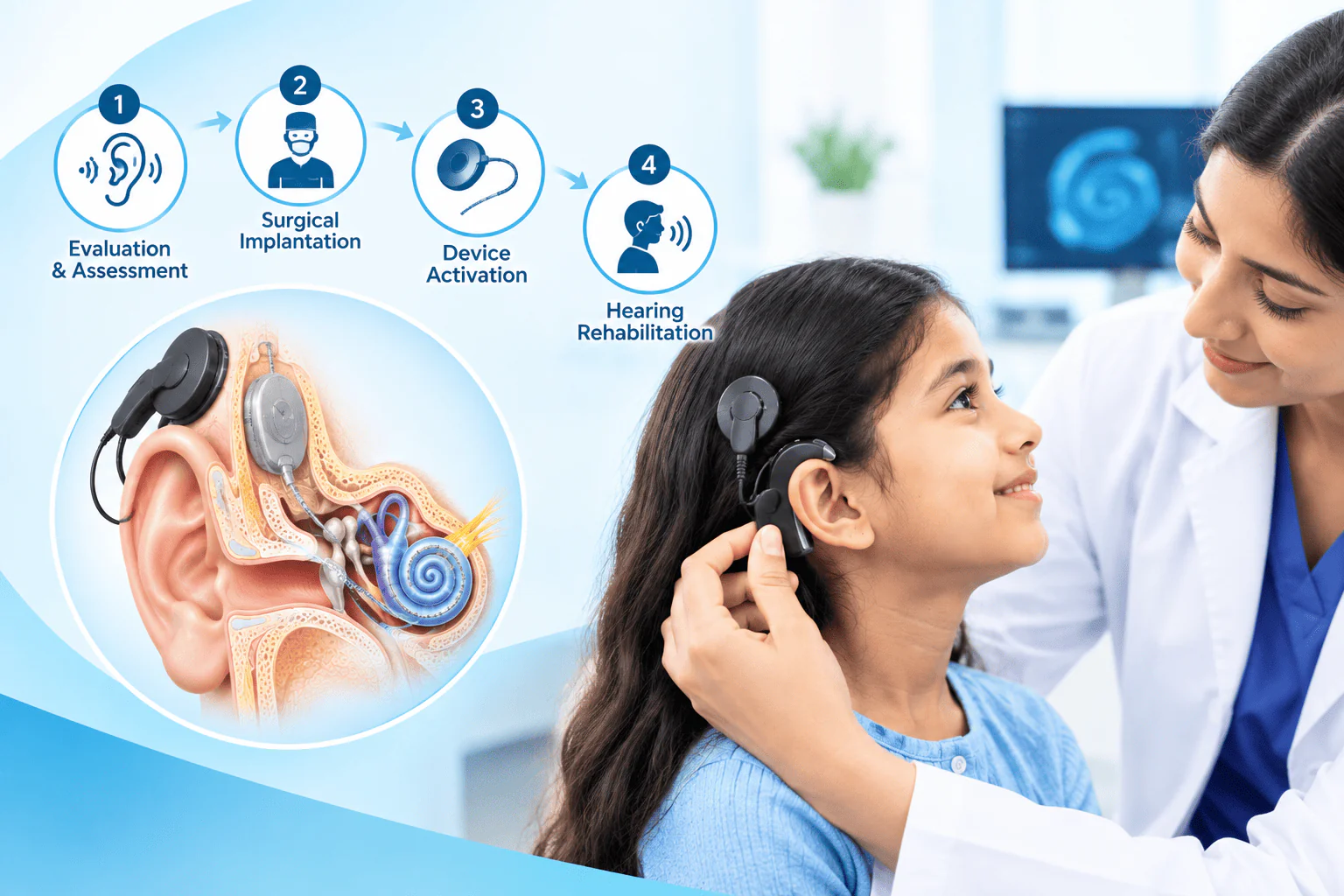
Audiologist fitting a cochlear implant sound processor on a patient

Our Approach

Careful Evaluation. Safe Surgery. Lifelong Hearing Support.

  • Consultation & Candidacy Evaluation

    A detailed hearing history, ear examination, hearing tests and imaging to check whether a cochlear implant is right for you or your child

  • Counselling & Device Selection

    Clear guidance on benefits, expectations and device options, so you and your family can decide with confidence

  • Cochlear Implant Surgery & Activation

    Safe implant surgery by our ENT surgeons, followed by device activation and careful programming (mapping) of the processor

  • Auditory & Speech Rehabilitation

    Listening and speech therapy, regular mapping reviews and long-term follow-up to help you get the most from your implant

Treatment Options

Advanced Treatments & Solutions

From accurate testing to lifelong hearing support, we offer modern cochlear implant care matched to the type and degree of your hearing loss, including:

Hearing & Implant Candidacy Testing

Hearing tests, hearing aid trials and imaging that show how much benefit you get from hearing aids and whether a cochlear implant is suitable.

Cochlear Implant Surgery

Careful surgery by our ENT specialists to place the internal implant and electrode in the cochlea, using techniques that protect the inner ear and aim for a smooth recovery.

Activation & Processor Mapping

Switch-on of your sound processor a few weeks after surgery, followed by regular programming sessions to set sound levels for comfortable, clear hearing.

Auditory & Speech Rehabilitation

Personalized listening and speech therapy that helps the brain learn to understand sound through the implant, for children and adults, with regular follow-up.

Take the First Step
Towards Better Hearing

Get expert care for severe hearing loss, with a careful cochlear implant evaluation, safe surgery and long-term rehabilitation so you or your child can hear and connect with confidence.

Book an Appointment

Frequently Asked Questions

Find answers to common questions about cochlear implants and severe hearing loss.

When should I see an ENT doctor about hearing loss?
See an ENT doctor if you or a family member struggles to understand speech even with hearing aids, often asks people to repeat themselves, or avoids phone calls and group conversations because of hearing difficulty. For children, get a hearing check if a newborn hearing screen was not passed, if your child does not respond to sounds, or if speech and language are delayed. Sudden hearing loss in one or both ears needs urgent attention. Please see a doctor as soon as possible, because early treatment gives the best chance of recovery.
Who is a candidate for a cochlear implant?
Children and adults with severe to profound hearing loss in both ears who get little benefit from properly fitted hearing aids may be candidates. In some cases, people with deafness in one ear are also considered. Imaging should show that the inner ear and hearing nerve can support an implant, and you should be medically fit for surgery. A good candidate also understands what the implant can and cannot do, and is ready to commit to follow-up and rehabilitation. Our team decides candidacy after a full evaluation, so a consultation is the best way to find out.
How is a cochlear implant different from a hearing aid?
A hearing aid makes sound louder and relies on the inner ear to pick it up. A cochlear implant works differently. An external processor captures sound and sends it to an internal implant, which stimulates the hearing nerve directly through tiny electrodes placed in the cochlea. This bypasses the damaged hair cells, so it can help when hearing aids no longer give enough clarity. The sound is not the same as natural hearing, but the brain learns to make sense of it with time and practice.
What happens during surgery, and what is recovery like?
Before surgery you will have hearing tests, imaging, a hearing aid trial and counselling. The operation is done under general anaesthesia. The surgeon makes a small cut behind the ear, places the implant under the skin and guides the electrode into the cochlea. Many patients go home within a day or two and recover over a few weeks. As with any surgery, there are risks, such as infection, temporary dizziness, changes in taste, and, rarely, facial nerve injury or device problems. Your surgeon will explain these in detail, and may advise vaccinations to lower the risk of infection.
When is the implant switched on, and how long does it take to hear well?
The processor is usually switched on a few weeks after surgery, once the area has healed. Sounds may seem unfamiliar or mechanical at first. Your audiologist then adjusts the settings (called mapping) over several visits in the first months and at regular check-ups afterwards. Speech understanding usually improves gradually over months with daily use and listening practice. Results vary from person to person. Children also need regular speech and language therapy so they can build listening and speaking skills with their implant.
Scroll to Top